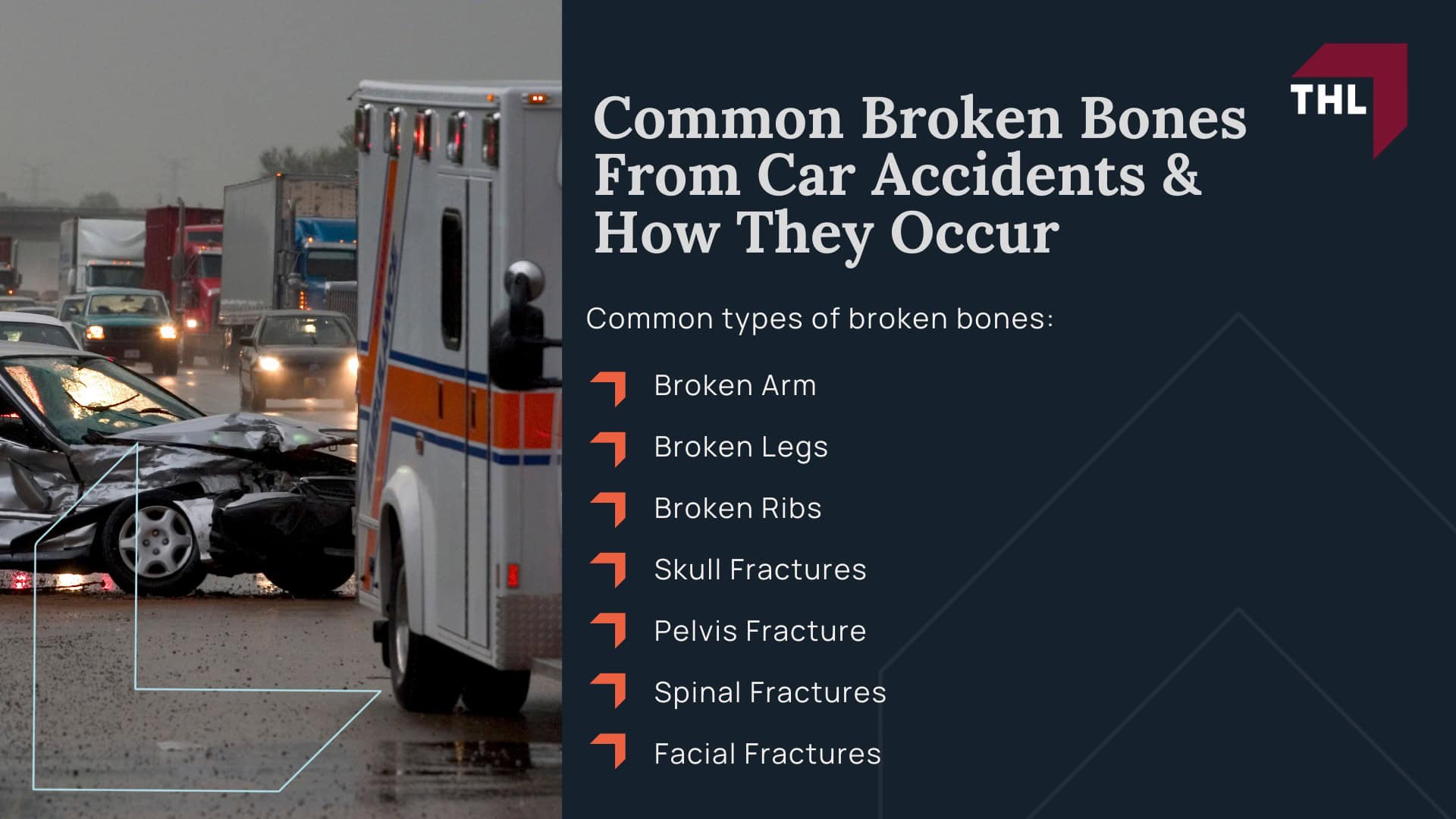
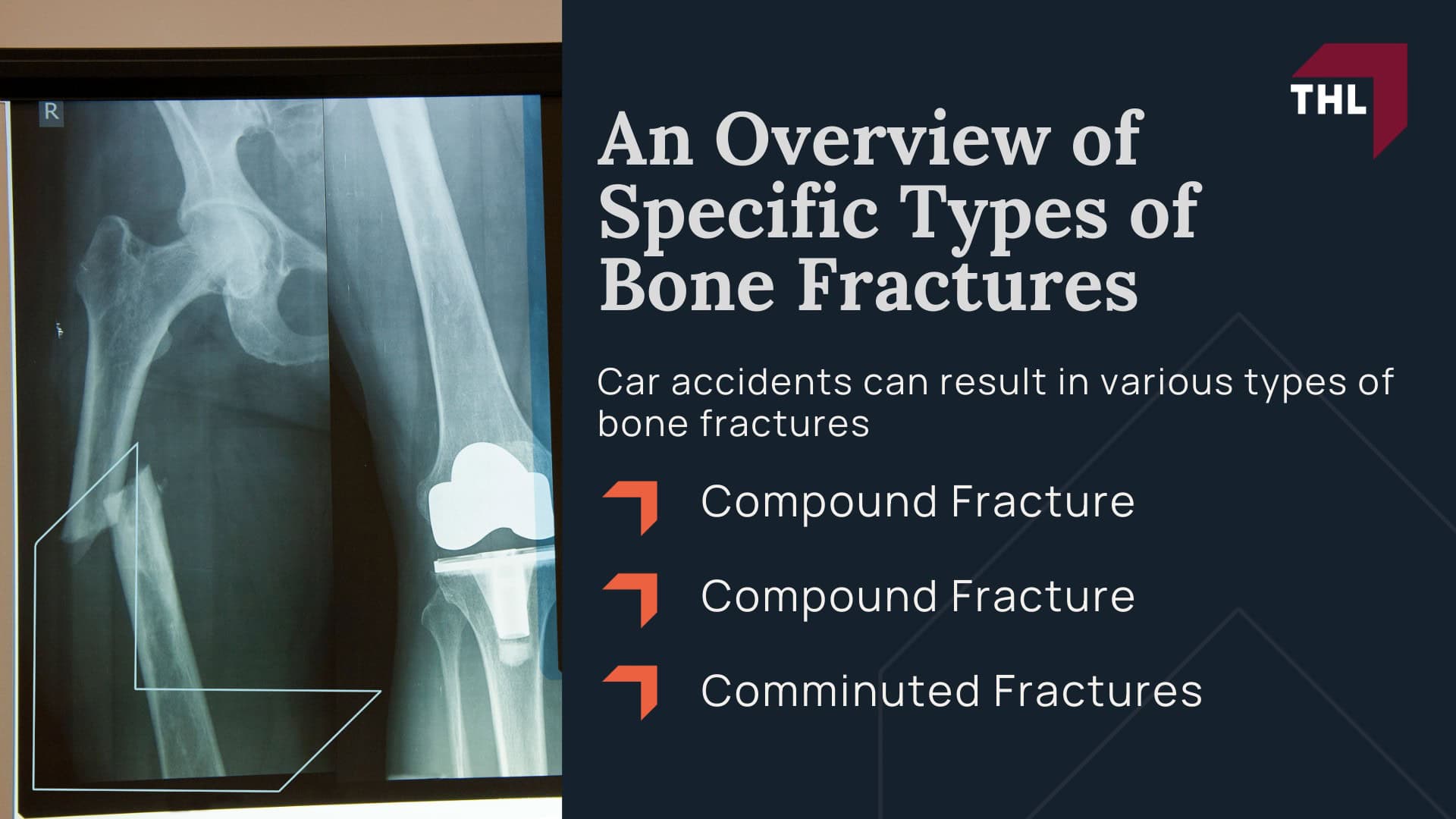
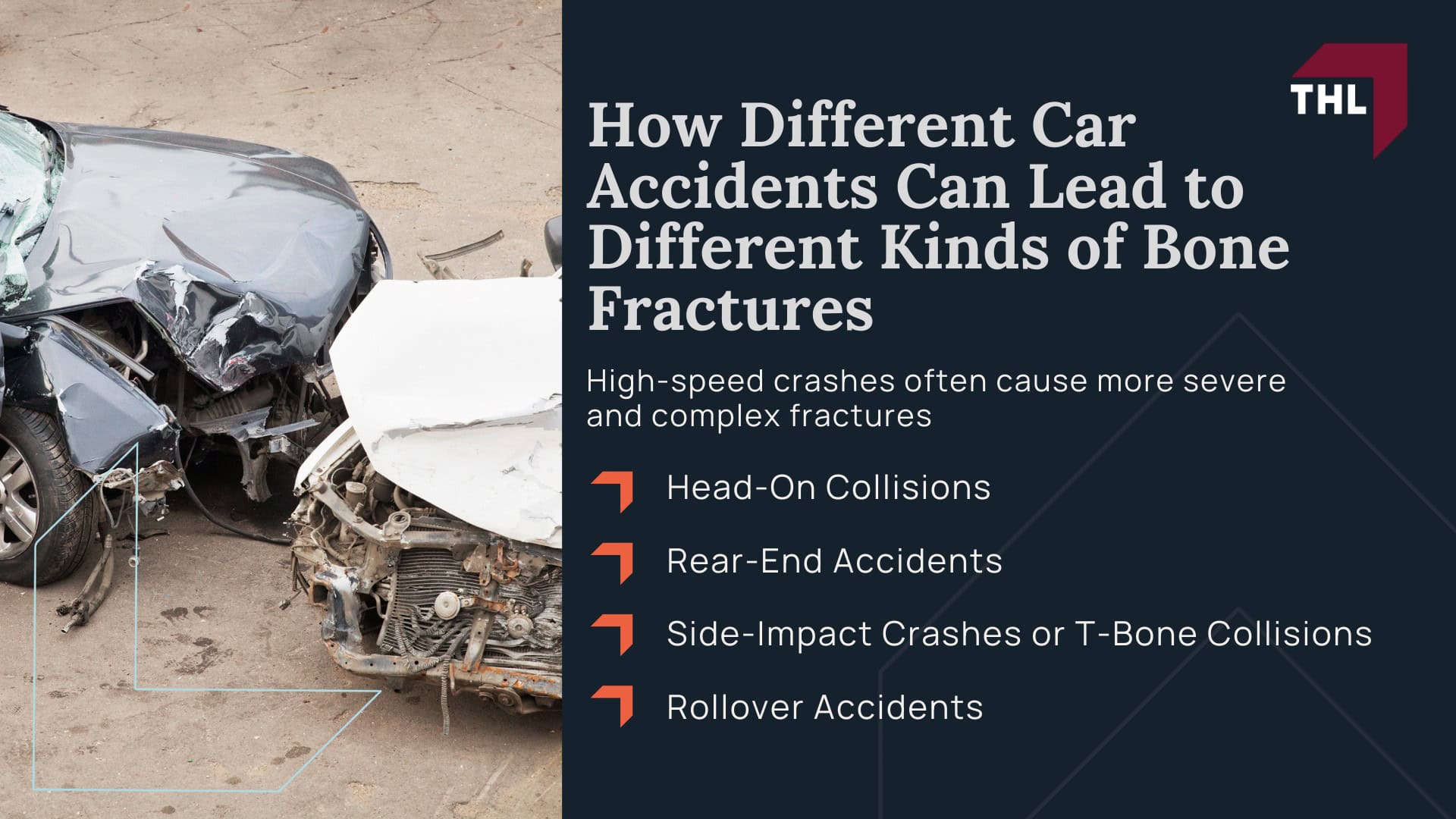
Different types of car accidents, such as head-on collisions, rear-end crashes, side-impact wrecks, and rollover accidents can result in a variety of bone fractures, with the nature and severity of the impact directly influencing the type and location of the fractures sustained.
High-speed crashes often cause more severe and complex fractures, while low-impact accidents might result in simpler, more localized breaks.

Head-On Collisions
Head-on collisions are among the most severe types of car accidents and often lead to lower limb fractures.
The force of impact from a head-on collision can cause significant damage to the legs and feet, resulting in fractures ranging from simple breaks to more complex comminuted fractures.
Drivers often sustain injuries like pelvic fractures and fractured ribs.
Other injuries from head-on car crashes can include:
- Ankle fractures
- Femur fractures
- Skull fracture
- Spinal fractures
The severity of lower limb fractures can vary depending on factors such as the speed of the vehicles involved and the use of safety devices like seat belts and airbags.
Rear-End Accidents
While typically less severe than head-on collisions, rear-end collisions can still cause significant harm, including spinal compression fractures.
The abrupt impact from a rear-end collision can exert tremendous force on the spine, leading to compression fractures in the vertebrae.
These fractures can result in chronic pain, limited mobility, and other long-term complications if not promptly diagnosed and treated.
Besides compression fractures, other injuries resulting from a rear-end collision include soft tissue injuries like whiplash.
Whiplash can occur because of the sudden shift of the neck from front to back.
Whiplash can lead to extensive tissue damage to the structures surrounding the upper spinal column.
Side-Impact Crashes or T-Bone Collisions
Side-impact crashes, also known as T-bone collisions, frequently result in rib and pelvis fractures.
The lack of structural protection on the sides of vehicles leaves occupants vulnerable to direct impact from colliding vehicles or objects.
During T-bone collisions, ribs are the most common broken bones.
Rib fractures can occur due to blunt force trauma to the chest area.
Pelvic fractures are also common bone fractures following high-impact T-bone car accidents.
A pelvic fracture may result from the sudden lateral movement of the body during the collision.
Rollover Accidents
Rollover accidents pose a unique risk of multiple and severe bone fractures due to the vehicle’s violent rotation and overturning.
Individuals involved in rollover accidents may sustain a combination of fractures, including compound, comminuted, and spinal compression fractures.
In the aftermath of these car accidents, broken bones include the skull, the facial bones, and the upper segments of the spine.
The complex nature of these injuries often necessitates immediate medical treatment and comprehensive treatment to address the full extent of the damage.
In the case of skull fractures and spinal fractured bones, care will involve diagnosing broken bones and a victim’s movement limitations.
If there are soft tissue injuries or traumatic brain injuries, surgery, rehabilitation, and close monitoring are necessary.